
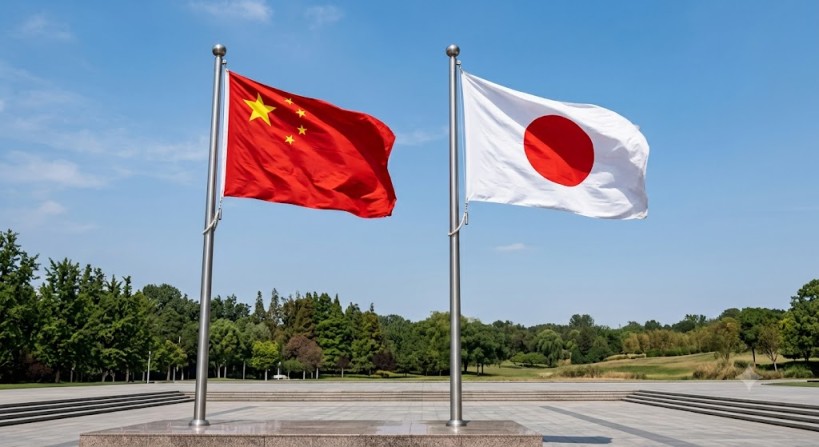
China has implemented new export controls affecting 40 Japanese entities, citing concerns over Japan’s military enhancement and alleged “remilitarization” endeavors. The restrictions encompass 20 Japanese companies and divisions, including segments linked to prominent corporations. These measures prohibit Chinese and foreign exporters from supplying specific dual-use goods that may serve both civilian and military functions to these entities.
An additional 20 Japanese entities have been placed on a watch list. For these, exporters must obtain special approvals, conduct risk assessments, and ensure that the exported products will not be utilized for military purposes. China justifies these actions as necessary to deter Japan’s purported military expansion, expressing unease over Japan’s bolstered defense capabilities, particularly its development of long-range weaponry and enhanced security alliances with other nations.
In response, Japan has condemned the export controls as unacceptable and has called for their retraction. Japanese authorities have pledged to assess the implications of these measures and to explore appropriate counteractions. The tension between the two countries has escalated following Japan’s expansion of its defense strategies and military capabilities, with China consistently opposing Japan’s security policies, especially those related to Taiwan.
Analysts suggest that China’s restrictions may serve partially as a diplomatic caution rather than as an extensive economic strategy. Nonetheless, diplomatic relations between China and Japan remain delicate amidst broader regional security challenges. This situation highlights the fragile nature of their interactions and the complexities of geopolitical dynamics in the region.