
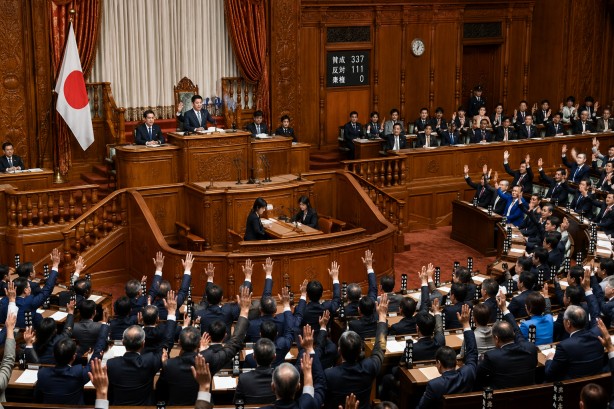
In a significant move to address the dwindling numbers within Japan’s imperial family, the country’s Lower House has approved a pivotal bill that would amend the Imperial House Law. This legislative change, which garnered critical support from the Centrist Reform Alliance at the last minute, aims to ensure the sustainability of the imperial lineage amid a growing concern over its shrinking size.
The proposed legislation introduces key measures by allowing female members of the imperial family to maintain their royal status post-marriage, a departure from the traditional practice where they would lose this status. Furthermore, the bill seeks to reintegrate male-line descendants from former imperial branches into the royal fold through adoption. A crucial aspect of the bill is the provision that sons born to these adopted members could be eligible for succession, a point that has ignited considerable political discourse within the country.
The ruling Liberal Democratic Party has championed these reforms, underscoring their importance in preserving Japan’s historical convention of male-line succession. With the number of heirs currently in the imperial family being limited, the party argues that such changes are essential for maintaining the continuity of the throne.
Despite its passage through the Lower House, the bill’s journey is far from over. It will now proceed to the Upper House, where it is expected to undergo rigorous examination. Opposition lawmakers have already signaled their intent to propose amendments, particularly targeting the adoption-related clauses that have become a focal point of contention in the ongoing debate.