
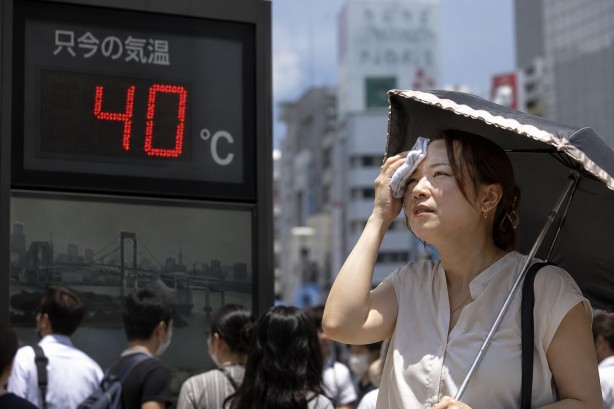
On July 21, Japan faced sweltering heat as a powerful high-pressure system propelled temperatures beyond 40°C in various regions, marking the ninth year in a row such extreme heat has been observed. This scorching weather coincided with the recent introduction of the term “kokushobi,” or “cruelly hot days,” by meteorologists in April, used to describe days reaching these intense temperature levels.
Tajimi, located in Gifu Prefecture, recorded the highest temperature of the day at 40.3°C, closely followed by Gujo, which reached 40°C. In Aichi Prefecture, the city of Toyota also experienced severe heat, with temperatures climbing to 40.1°C. These figures underscore the widespread impact of the heatwave, which affected both eastern and western parts of the country.
By the afternoon, temperatures soared to at least 35°C at 255 of Japan’s 914 weather observation stations, further illustrating the extent of the heatwave. The oppressive heat prompted the Environment Ministry and local meteorological authorities to issue heatstroke alerts for 42 prefectures, the highest number recorded this year, urging caution among citizens.
Residents were strongly advised to utilize air conditioning, maintain hydration, and replenish salt levels to prevent heat-related illnesses. The alerts served as a stark reminder of the health risks posed by such extreme weather conditions, emphasizing the need for vigilance and preventive measures during these “cruelly hot days.”